Case study 03 / 13
Paygent
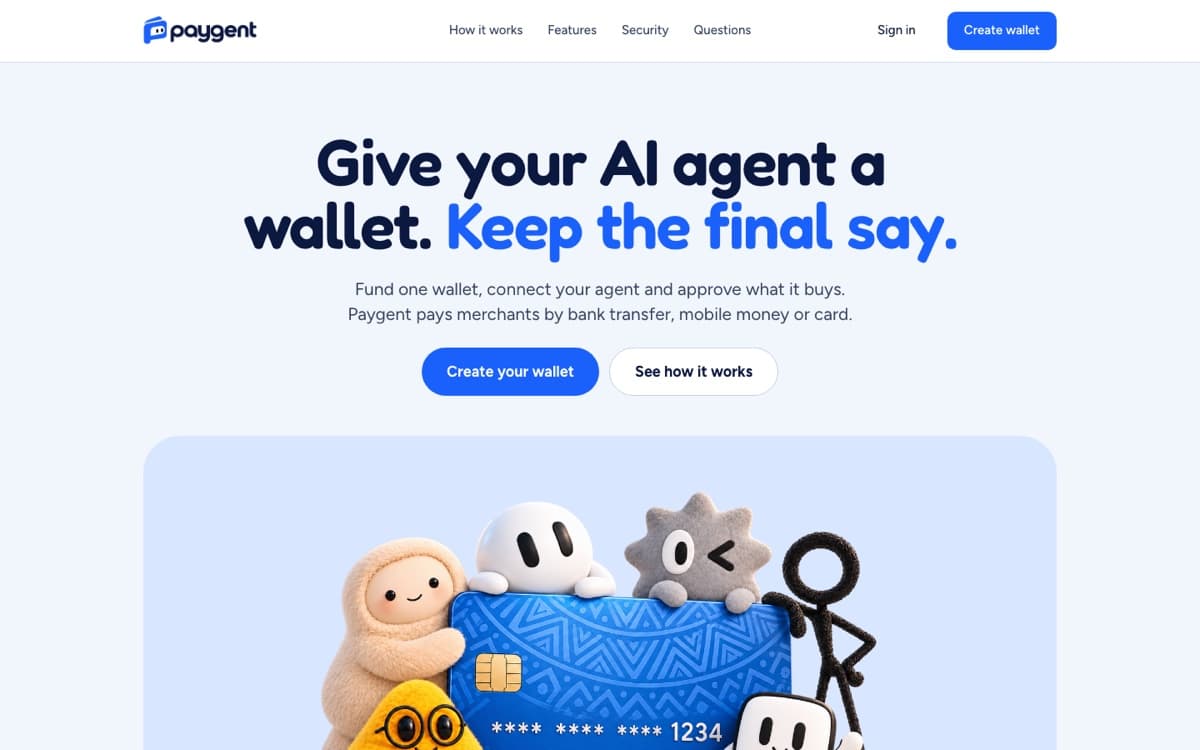
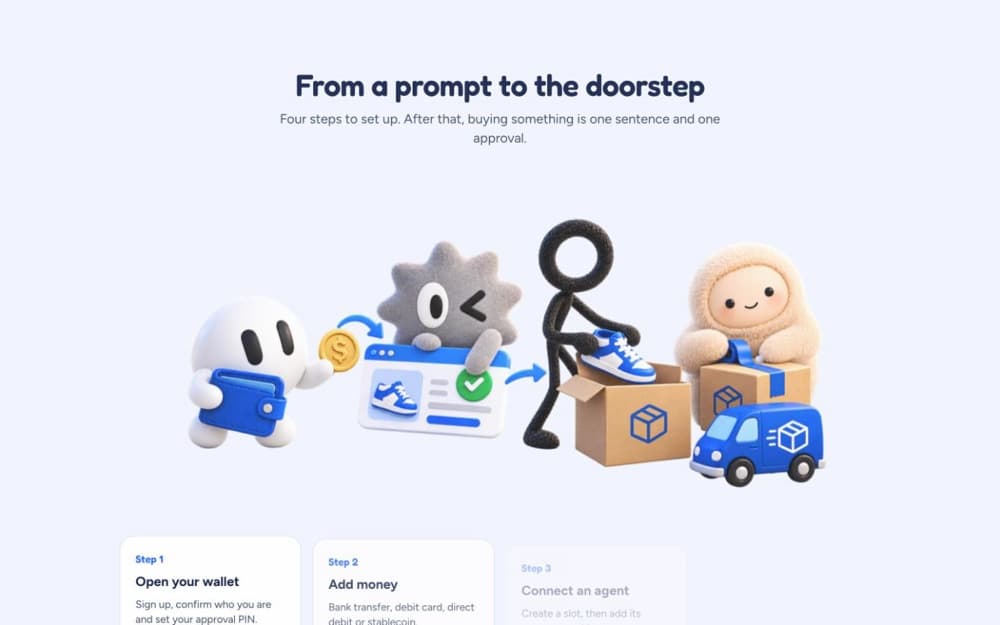
A wallet that AI agents pay from. People fund one wallet, connect their agents, and approve every purchase with a PIN. Paygent then pays the merchant by bank transfer, mobile money or card.
Role
Backend Development
Category
Fintech
Location
Nigeria
Year
2026
The challenge
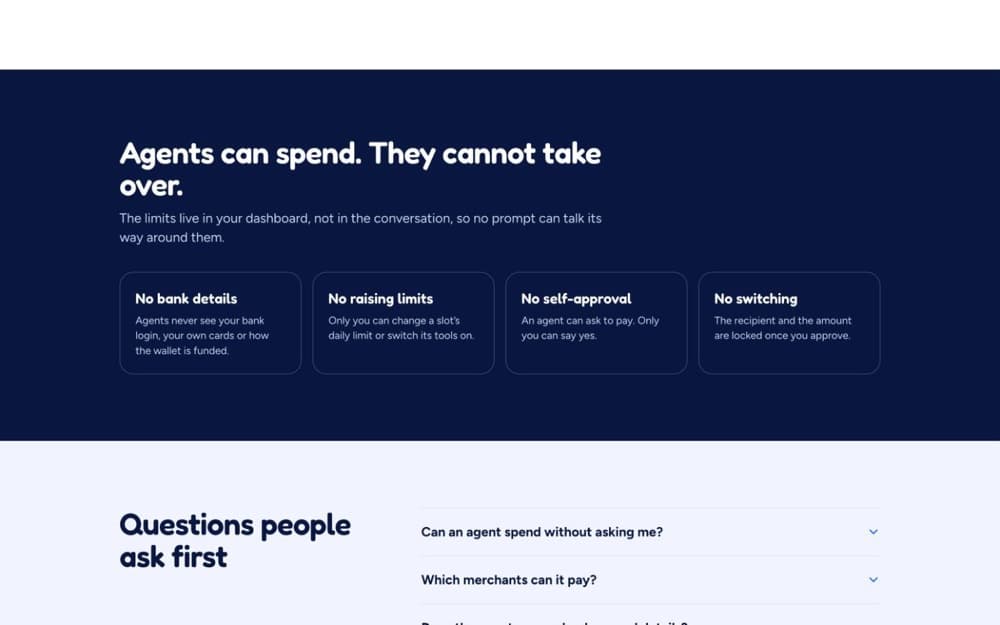
AI agents can now find what you want to buy, but handing one your bank details is a risk nobody should take. Paygent had to let agents pay real merchants while keeping people in full control: no agent can see how the wallet is funded, raise its own limits, approve its own payments or change a payment once it is approved.
My role
I built the entire backend on my own: the wallet, the approval flow, the payment rails and the agent connections.
What I built
- 01
Payment requests that show who is paid, how much and why, approved with a PIN, locked once approved and expiring if unanswered
- 02
Payouts by bank transfer, mobile money, or a virtual card that stays empty until a payment is approved
- 03
Wallet funding by account number, debit card, direct debit and stablecoins (USDT and USDC), plus withdrawals
- 04
A slot for each agent, with its own connector address, daily limit and per-tool switches, so limits live outside the conversation
- 05
A receipt for every payment, filed under the agent that made it
Stack
- Node.js
- NestJS
- PostgreSQL
- MongoDB
- Redis
- And more
Next case study
HopeWorks
Full Stack Development